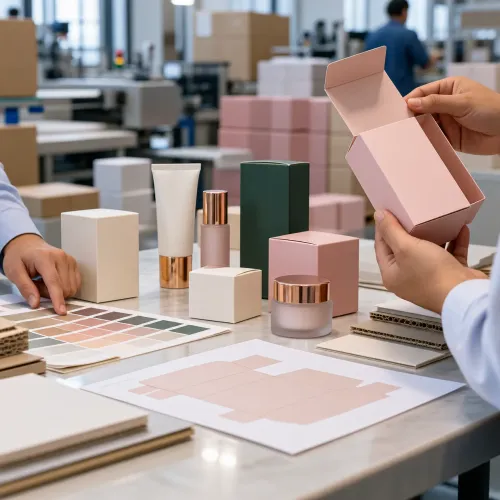


A cosmetics packaging box has to compete visually while also performing a practical role. Skincare, makeup, fragrance, haircare, and personal care products are often displayed alongside many alternatives, making packaging an important part of how customers recognise and understand a product.
For cosmetic businesses in Jaipur and Rajasthan, packaging development should therefore involve more than choosing colours and decorative finishes. Structure, product fit, printed information, material selection, and consistency across the product range all deserve attention.
Product Dimensions Come First
Cosmetic products are sold in many formats, including bottles, tubes, jars, pumps, droppers, compacts, and small containers.
The outer box should correspond to the actual primary container. Excessive empty space can allow movement, while a box that is too tight may be difficult to pack or can become damaged during insertion.
Before finalising packaging, provide accurate dimensions and, where practical, physical product samples.
Design for Shelf Recognition
Cosmetic packaging often needs to communicate a brand identity quickly.
Rather than relying on excessive visual elements, brands can establish recognition through consistent use of typography, colour systems, graphic elements, product naming, and box structures.
A skincare range, for example, may use a common visual system while differentiating variants through controlled changes in colour or product information.
This approach can make the range easier to identify without making every carton identical.
Readability Should Not Be Sacrificed
Cosmetic boxes may need space for ingredients, directions, product quantity, manufacturing information, warnings, batch information, and other relevant declarations.
Artwork should account for these requirements from the beginning.
Small fonts, weak contrast, or placing essential information over complicated graphics can make packaging difficult to read. A design should be reviewed at its actual printed size rather than only on a large computer screen.
Finishing Should Have a Purpose
Various printing and finishing options can alter the appearance and tactile character of cosmetic packaging.
Depending on the box and design, businesses may explore finishes that highlight selected elements or create a particular surface appearance. The decision should support the brand positioning rather than being added simply because a finishing option is available.
Premium-looking packaging is usually the result of coordinated material, print, structure, and design decisions rather than one decorative feature.
Consider the Full Product Journey
Packaging must remain presentable after manufacturing.
Think about how cartons will be packed into larger shipping boxes, transported to distributors or retailers, stored, stacked, and handled before reaching the customer.
Surface finishes and structural specifications should be considered in relation to these conditions.
For Jaipur-based cosmetic brands selling across Rajasthan or shipping products to other Indian markets, transportation requirements can be particularly relevant when developing packaging specifications.
Build Consistency Into Future Products
Packaging decisions become easier when brands establish a repeatable system.
A consistent layout can provide designated areas for the logo, product name, variant, ingredients, directions, and other information. New products can then be incorporated into the same family without redesigning the entire packaging language.
Riya Creation works with brands and manufacturers in Jaipur that require customised printed packaging. Cosmetic businesses can make packaging discussions more efficient by preparing product samples, dimensions, artwork requirements, expected quantities, and desired presentation before production planning begins.
An effective cosmetics packaging box should help protect the product, communicate necessary information, and make the brand recognisable. Attractive graphics matter, but successful cosmetic packaging is created when visual design is supported by thoughtful structure and practical production planning.