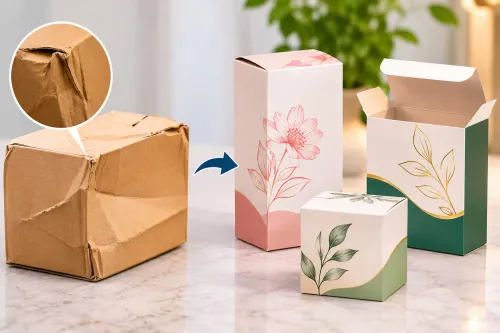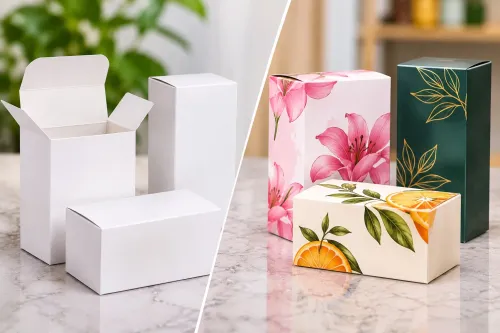

Choosing between a Rigid board box and a folding carton can affect packaging cost, storage, transportation, product presentation, and the customer's opening experience. Although both formats can carry branding and protect products, they serve different packaging priorities.
For brands and manufacturers in Jaipur, understanding these differences is useful before requesting quotations or approving a packaging structure.
Understanding Rigid Board Boxes
Rigid boxes use a substantially firmer construction and generally retain their shape rather than being supplied as a simple folding carton.
They are commonly considered for products where presentation, structural feel, or premium positioning is important. Potential applications include gifting, jewellery, premium accessories, speciality foods, corporate kits, luxury products, and high-value retail merchandise.
The sturdy format can create a substantial feel in the customer's hands and may also encourage reuse.
Where Folding Cartons Differ
Folding cartons are typically produced from paperboard that is printed, die-cut, creased, folded, and glued into shape.
They are commonly used for cosmetics, pharmaceuticals, FMCG products, personal care products, food items, and general retail packaging.
Because many carton styles can be transported or stored efficiently before final assembly, they can be practical for businesses packing larger product volumes.
Compare the Two Around Real Requirements
The decision should not be based solely on which option looks more premium.
Consider several factors:
Product positioning: A premium gift set may benefit from a rigid presentation, while a frequently purchased FMCG product may be better suited to a folding carton.
Product weight: The structure should be compatible with the product's size and weight.
Storage: Packaging that occupies significant space can affect warehouse requirements.
Transportation: Consider how empty packaging reaches the filling location and how finished products are distributed.
Packing process: Determine whether the structure fits manual or operational packing requirements.
Budget: Material, construction, printing, finishing, quantity, and complexity all influence project economics.
Presentation Is Not Exclusive to Rigid Packaging
A common misconception is that folding cartons must look basic.
Good artwork, appropriate board selection, accurate printing, and well-chosen finishing can give folding cartons a strong retail presence. Similarly, an expensive rigid structure will not automatically create effective packaging if dimensions, graphics, or internal presentation are poorly planned.
The best result comes from matching the structure to the product.
Think About Product Range Consistency
A company may not need to use the same construction for every item.
A cosmetics brand might use folding cartons for regular products and a rigid box for premium kits. A food business could use standard cartons for individual products while selecting rigid packaging for festive gifting.
Creating a packaging hierarchy can help brands differentiate product tiers while maintaining a recognisable visual identity.
Make the Decision With Physical Details
Businesses requesting packaging in Jaipur should provide product dimensions, weight, quantities, intended retail positioning, distribution method, and branding requirements.
Riya Creation can use these details to discuss customised packaging options according to the project's actual needs rather than selecting a box purely from appearance.
Neither rigid board boxes nor folding cartons are universally better. They solve different packaging problems. The appropriate choice depends on how much structural strength is required, how the product will be packed and transported, the desired customer experience, and the commercial realities of producing the packaging at the required scale.
Keywords